The Ubaye Valley and Mexico
In this article, let us pay tribute first and foremost to the Ubaye Valley, and in particular to the most discussed, celebrated, illustrated and renowned episode in its history.
The pioneers of Jausiers
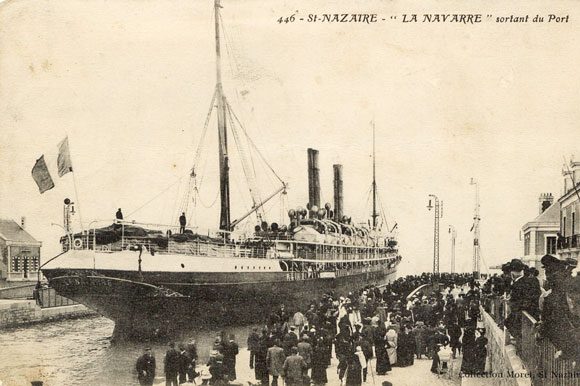
«Once Upon a Time», the three Arnaud brothers, owners of a silk factory in Jausiers, were the first pioneers to venture to Mexico, having previously gained experience in Louisiana supplying textiles to the US Army. It was after their first establishment of a fabric shop in Mexico City that the Arnaud brothers' success triggered the first wave of emigration from the Ubaye Valley to Mexico.
The Barcelonnettes' epic journey to the New World unfolded in several acts. From 1821 to 1860: settlement. From 1861 to 1876: expansion. From 1876 to 1914: the golden age. Then came the decline from 1911 onwards, following the fall of President Porfirio Diaz — the very man whose rule had encouraged foreign investment in Mexico, and who was said to be Francophile and anti-American.
What followed was a period of anarchy, internal disorganisation, strikes and attacks on transport routes and production sites. Many Barcelonnettes lost their businesses and means of production, and returned to France empty-handed. It is worth noting that many came back during the Great War, and the wealthiest among them brought their «péones» with them... a plaque in Barcelonnette pays tribute to them.
The Mexican Revolution (1913–1920), driven in part by Emiliano Zapata and Pancho Villa, along with the First World War and the economic crisis of 1907, sounded the death knell for this economic and human expansion. Over more than a century, around three thousand Ubayens left the valley to reach Mexico. In the XIXth century the population stood at 18,000; today it is around 7,000. It is estimated that between 30,000 and 60,000 descendants of the «Barcelonnettes» now live in Mexico.
The Ubaye Valley... and beyond
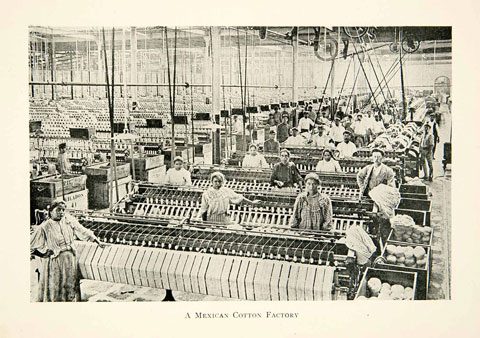
It is worth recalling that other valleys, such as the Queyras around Aiguilles in the Hautes-Alpes, also adopted this model of economic emigration — to California, Brazil and Argentina. Farmers from the Champsaur became shepherds in the American West. Although the «Barcelonnettes» were the first pioneers in Mexico in 1850, others from the Seyne region, Seyne-les-Alpes, Digne-les-Bains, Forcalquier, Les Mées and especially a great many Basques followed. The Basques eventually outnumbered the Valéians (Ubayens) as residents in Mexico. On the ground, the association, interaction and solidarity among these different populations from the Alps to the Pyrenees all came to be known collectively as «the Barcelonnettes».
The reason for this success and the Ubayens' initiative in this transatlantic adventure lies in their long history as travelling merchants. The success of this economic expansion is also explained by the exceptionally high literacy rate in the Ubaye Valley. Some neighbouring valleys in the Alpes-de-Haute-Provence barely reached 40 %. This gap can be partly explained by the establishment of a teacher training college in Barcelonnette, required by a decree that each prefecture should have one. It was later relocated to Digne-les-Bains.
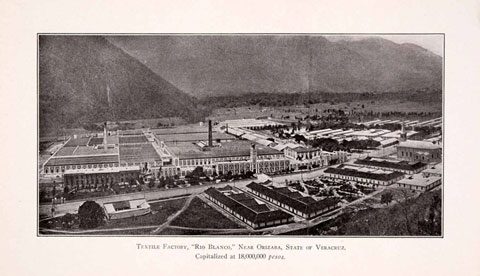
It was also a local custom that, during the dead season (from All Saints' Day to Easter), in the villages of Méolans-Revel, Le-Lauzet-sur-Ubaye, Condamines-Chatelard, Saint-Paul-sur-Ubaye, Saint-Pons, Bayasse..., heads of families would gather to hire a schoolteacher, chosen at the end-of-September fair on Place Manuel, where each candidate distinguished himself by wearing a goose quill in his hat — one for writing, two for arithmetic, and three for the most learned, who had some knowledge of Latin. In exchange for the education provided to the village children, each family took turns providing lodging and meals. At the end of the season, the teacher received a fine gold Louis coin before departing.
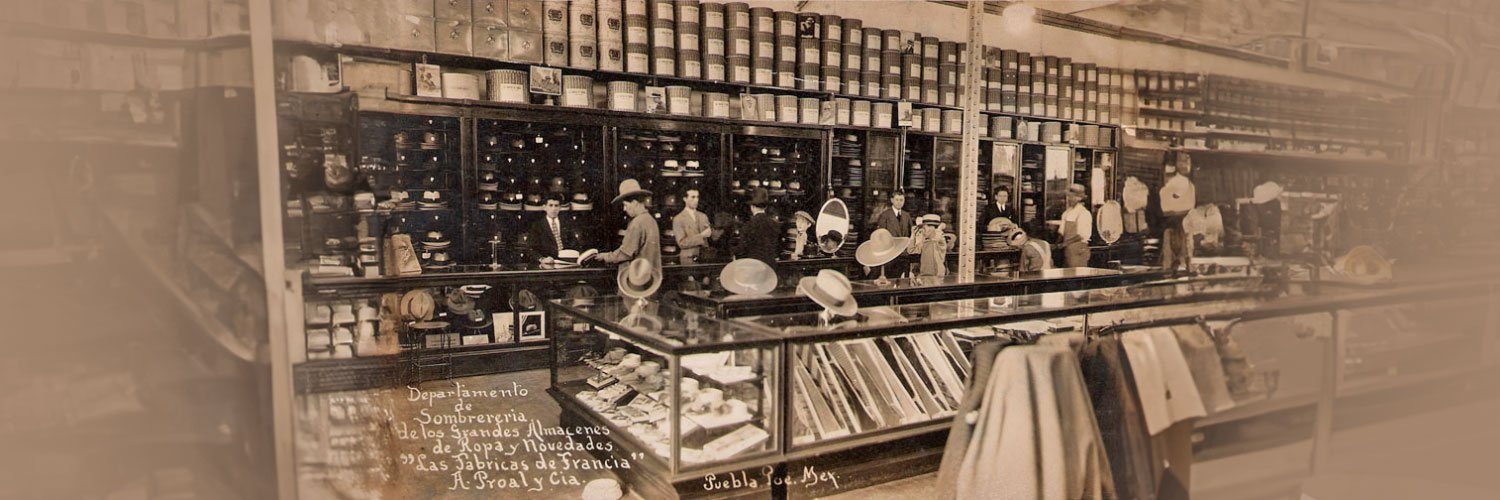
Signs of Mexico visible in Barcelonnette
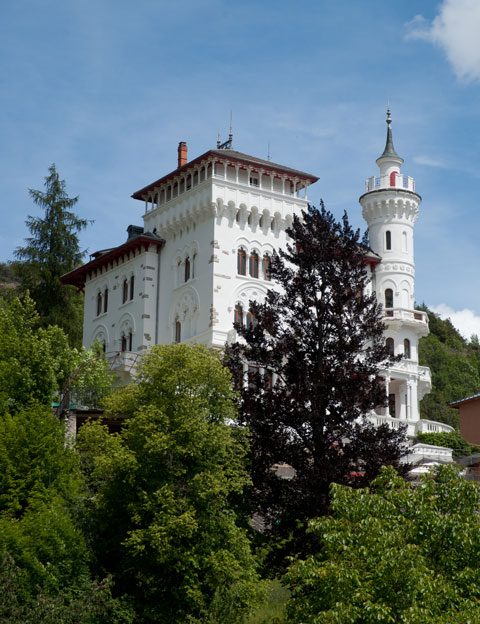
The visible traces of this Mexican epic are still present in Barcelonnette today, in the form of grand residences built between 1890 and 1914 — imposing bourgeois homes that still stand. Around 50 can be found in Barcelonnette and close to 30 in Jausiers, with a few more in Seyne-les-Alpes. These are known as «Mexican houses» : apart from a certain decorative style, some colourful and picturesque, they are simply built in the architectural style typical of bourgeois homes of the period, or as château-villas in Art Déco, Art Nouveau or Rococo style, like the Château des Magnans in Jausiers.
Cultural exchanges continue to this day, with Mexican festivals held in the Ubaye Valley each August. Gatherings are organised to maintain ties between American cousins and Ubaye cousins. A Mexican consulate with 7 honorary consuls is housed in the Villa Anita in Barcelonnette. There are also immersion programmes and exchange visits for Mexican and French students.
The valley also boasts a variety of shops selling Mexican goods and restaurants in Barcelonnette offering Mexican specialities, the most popular being l'Adelita on rue Émile Donnadieu. This Mexican epic, spanning nearly a century and a half, remains an extraordinary economic achievement for a rural population at the other end of the world. They inevitably helped lay the foundations of commerce and modern industry in Mexico. The success of the project was built on the solidarity of the «Valéians» around a socio-economic system (a mutual aid and welfare society established as early as 1848) that supported their settlement thousands of kilometres from their home valley.
The Ubayens' epic comes to an end
Of course, a dark and tragic side exists for many of the Ubayens who embarked on this adventure. Broken promises and shattered hopes for families who watched their loved ones leave the valley to seek their fortune. On the ground, things were far from straightforward. Those lucky enough at the outset to have built up a business or production unit subsequently suffered considerable or total losses during the Mexican Revolution — a revolution that, for some, amounted to a workers' uprising in an industrially tense climate, compounded by the economic crisis of 1907.
It is estimated that between 1880 and 1910, one million francs a year were brought back by returning Ubayens. These funds were overwhelmingly reinvested in the construction of their own homes in the valley (10 %), but also in properties on the Côte d'Azur or in certain Parisian neighbourhoods. Some investments contributed to local communal life in the Ubaye : the hospital in Barcelonnette, the Hacienda residence for people with disabilities, a museum in the Parc de la Sapière...
With a few exceptions, the boldness and economic success achieved overseas bore no real comparison to investment back in the valley. This is also explained by the fact that conditions were no longer favourable for reinvesting locally. By then, the wealth generated in Mexico was sufficient to enjoy the valley fully as a place of leisure, retirement and holiday. And above all, the vast majority of the «Barcelonnettes» — also known as «Los Franchutes» — had simply integrated into their adopted homeland. They had become more Mexican than Ubayan.
Can this lack of «return» investment in the Ubaye be held against them ? On one hand, perhaps not, when we consider the allure that all those who discover the valley for the first time feel today. Other Alpine valleys (Tarentaise, Maurienne...) that adopted an industrial economic model inevitably sacrificed the natural character of their surroundings. The Ubaye remains free of the major road and rail infrastructure that would have had a significant impact on the environment. The Ubaye river would, like other Alpine rivers, have been subjected to embankments, diversions, viaducts and tunnels... The watercourse would likely have been tamed to contain risks threatening industrial structures — captured to generate energy for some industrial purpose. The wild character of the Ubaye river, its natural flow that we enjoy today, would have a very different identity from what it is today.
What about Oueds & Rios and Mexico?
Simply an anecdote from November and December 1993. Two of us from the team were exploring the rios of south-east Mexico. Our objective : developing a tourist circuit around whitewater river descents by rafting. We had scouted several rivers in the Chiapas region, including the Rio Jatate, the Rio Shumulja, and the Rio Agua Azul, with magnificent potential for aquatic hiking and canyoning.
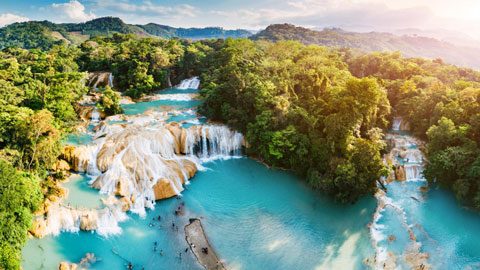
On 31 December we stopped for a short break in Palenque to celebrate New Year's Eve. On 1st January 1994 we left Palenque to explore the iconic Rio Usumacinta, a border river running alongside Guatemala — a magnificent river flowing through a tropical forest of exceptional flora and fauna, with canyons and archaeological sites along its banks, such as Piedras Negras.
We had barely left Palenque when we hit a military checkpoint, tanks... The Zapatist guerrilla forces were launching a violent uprising. The reason for this revolt ? That very day, the North American Free Trade Agreement (NAFTA) came into force. The charismatic Subcommander Marcos embodied the defence of indigenous peoples' autonomy — one of the first anti-globalisation and alter-globalisation movements. All the more striking since, ten days earlier, we had been blissfully exploring the rapids of the Rio Jatate deep in the Selva Lacandona, south-east of Ocosingo — the stronghold of the Zapatist National Liberation Army (EZLN) — without having spotted the slightest sign of this imminent great uprising...
For our fledgling team of adventurers , the die was cast — it was no longer our story that was being played out, but that of those who were living through it. We would never see the tourist development of our personal project in Mexico... caramba, foiled again!
Bibliography / Illustrations / Testimonials
- Charpenel Émile, L'épopée des Barcelonnettes ou toute la vie d'un valéian parti au Mexique décrite par lui-même, Bulletin de la société scientifique et littéraire des Basses-Alpes (réed.), Digne, 1976.
- Ubaye en cartes : Jean-François Délénat
- Charpenel Pierre-Martin et Proal Maurice, L'empire des Barcelonnettes au Mexique, Jean Laffitte éditeur, Marseille, 1986.
- Les Barcelonnettes au Mexique, Récits et témoignages, troisième édition revue et augmentée, Sabença de la Valeia, Barcelonnette, 1994.
- Chabrand Émile, Les Barcelonnettes au Mexique, Bibliothèque illustrée des voyages autour du monde par terre et par mer, Plon, 1897.
- Salvador Hernandez Padilla, El magonismo: historia de una pasión libertaria, 1900–1922, Era, 1984.
- Xavier Gastinel, Georges Lombard.
- Lebot Yvon, Sous-Commandant Marcos — Le Rêve Zapatiste, Seuil, 1997.
- Sous-Commandant Marcos, Depuis Les Montagnes du Sud-Est du Mexique, Le Temps des Cerises, 2002.
- « Il était une fois la Révolution » — Sergio Leone, 1971.
Also read: Who were these river rafters and boatmen?